
Clackamas County City Directory Holdings
Historic Clackamas County volumes are collection leads, not one uninterrupted countywide series. Oregon City is the strongest municipal research node, while Gladstone, West Linn, Willamette, rural communities, and other towns can require separate telephone books, tax rolls, census schedules, newspapers, or rural directories. The Oregon City Public Library Oregon Collection is a non-circulating reference collection, so staff and the catalog are the practical first route for a particular place and year. The State Archives, the Wilmer Gardner Research Library, and the Oregon Historical Records Index provide companion paths when the needed volume is absent.
| Collection lead | Verified years | Holding or locator | Research access |
|---|---|---|---|
| Oregon Collection local materials | Oregon City High School yearbooks from 1910; no full directory run published online | Oregon City Public Library, Carnegie building | In-library, non-circulating reference use; ask staff for title and year |
| Oregon City telephone directory | August 1932 | Wilsonville Public Library Northwest Heritage Index key OR CLAC D-OR.C 1932T | Catalog/index lead; confirm holding, copying, and access with the library |
| Cataloged city-directory examples | 1916, 1941, 1953, and 1960 examples | Genealogy-library catalog searches and local-library inquiries | Locating leads only; the official local shelf run was not published |
| Directory of Rural Residents | 1936 | Historic-property documentation and tax-assessor research context | One documented rural lead; verify physical custody before relying on it |
Online access is useful for the Oregon Historical Records Index and collection scope, but no official source verified a public, countywide full-text directory database. At the library counter, ask for historical volumes, telephone books, reverse sections, microfilm, obituary indexes, and permitted copying. The Family History Society and State Archives are the next stops for surname files, census, tax, probate, and historical county records.
Oregon City Library Directory Shelf
The Oregon City Public Library Oregon Collection at 606 John Adams Street is the local reference-room route for Oregon City, Clackamas County, and Oregon materials. It holds books, periodicals, reference works, and Oregon City High School yearbooks dating from 1910. Materials stay in the library and do not circulate. Listed hours are Sunday 10 a.m. to 5 p.m., Monday through Friday 10 a.m. to 6:30 p.m., and Saturday 10 a.m. to 6 p.m.; the phone is 503-657-8269. Bring the municipality and estimated year, then ask staff to search catalog records rather than assuming a catalog lead has a digital scan.
The Oregon Collection source page shows the kind of local reference collection available for Clackamas County directory research.
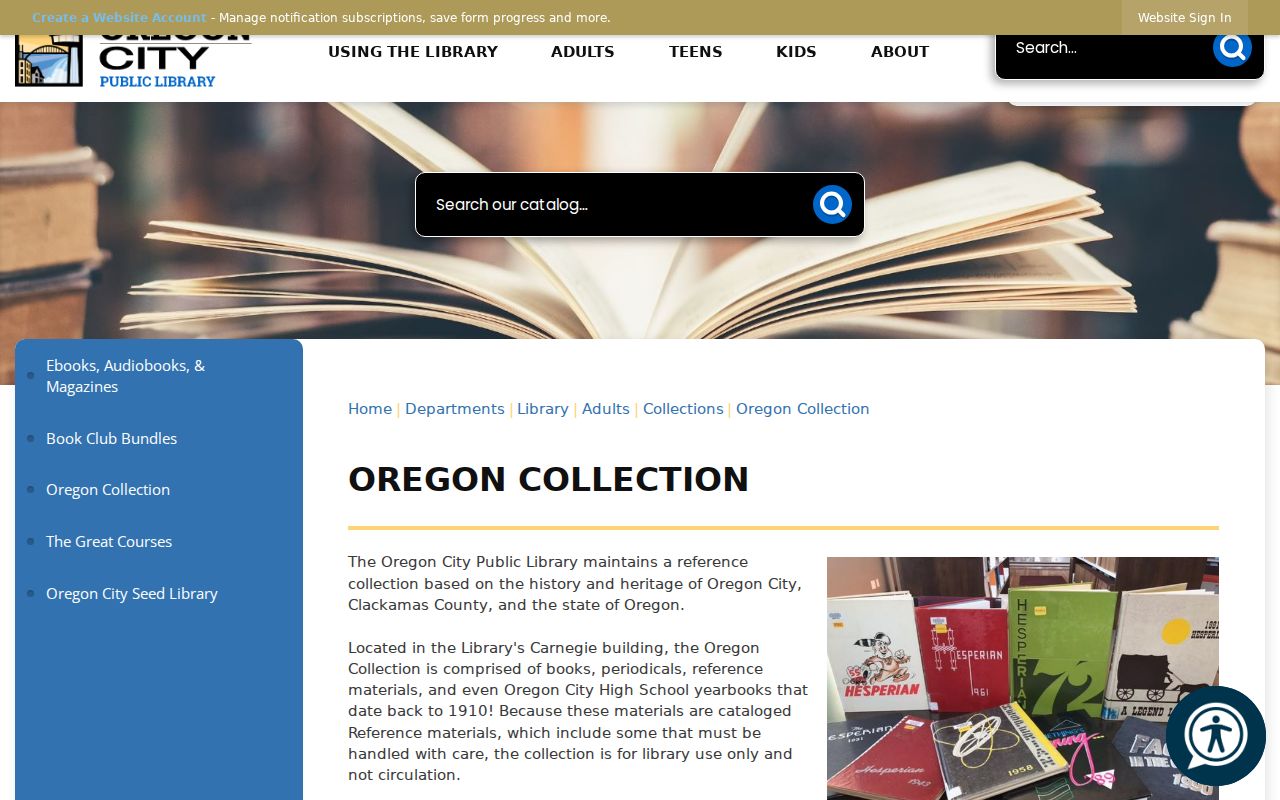
Reference use matters because a page citation, directory title, and holding location make a later check possible even when copying conditions vary.
For newspapers, census microfilm, Sanborn maps, and public-proceedings material, use the library’s separate Microfilm Scanning System information. It is a complementary research route, not proof that every directory volume is on microfilm.
The microfilm resource page is a useful lead for Clackamas County historical-directory companions and local serial research.
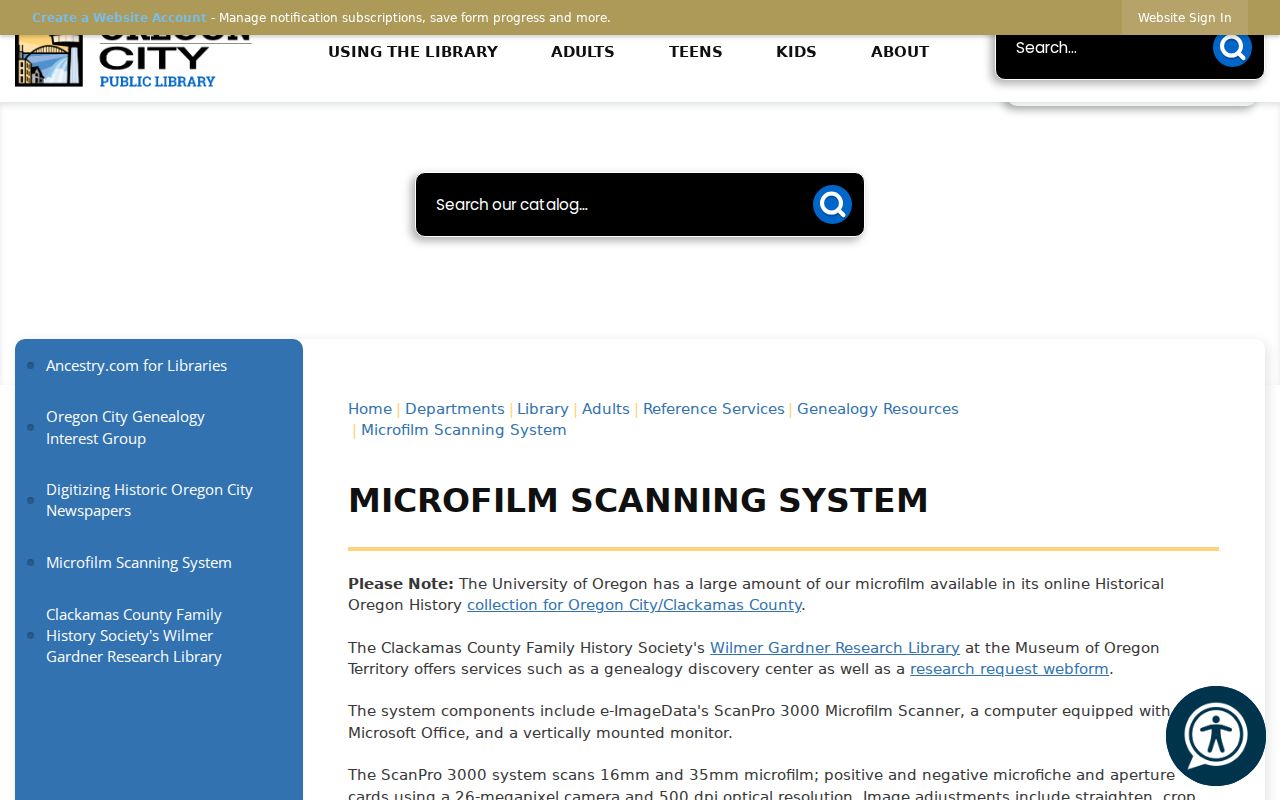
Use the volume itself for its own contents, then pair its date with a microfilm newspaper, census, or map only when that source covers the same place and period.
Note: A catalog result identifies a possible holding, while staff confirmation establishes whether the item can be consulted or copied.
Clackamas County Directory Years
Documented Oregon City titles show why a careful city-directory search names the book instead of claiming a seamless run. Historic-resource documentation cites Sohns & Woodbeck’s Clackamas County and Oregon City Directory from 1917, Pacific Directory Service’s Directory of Oregon City from 1941, and Pacific Directory Service’s Directory of Clackamas County from 1948. A National Park Service bibliography also notes a Sohns & Woodbeck 1916-17 directory at the Oregon Historical Society. These are useful title-and-year markers, not evidence that every year between them survives in the same location.
| 1916-17 | Sohns & Woodbeck directory evidence, including an Oregon Historical Society bibliography lead |
|---|---|
| 1917 | Clackamas County and Oregon City Directory, cited in Oregon City historic-resource documentation |
| 1941 | Pacific Directory Service, Directory of Oregon City |
| 1948 | Pacific Directory Service, Directory of Clackamas County |
The State Archives Clackamas inventory helps place directory clues beside assessment, census, deed, plat, and tax records. Its inventory is a finding aid, so it should guide a request or visit rather than be treated as a scanned directory page. The archive route is especially helpful when an early record uses a territorial or changing locality label.
The State Archives inventory is a locator for Clackamas County directory companions and historical series.
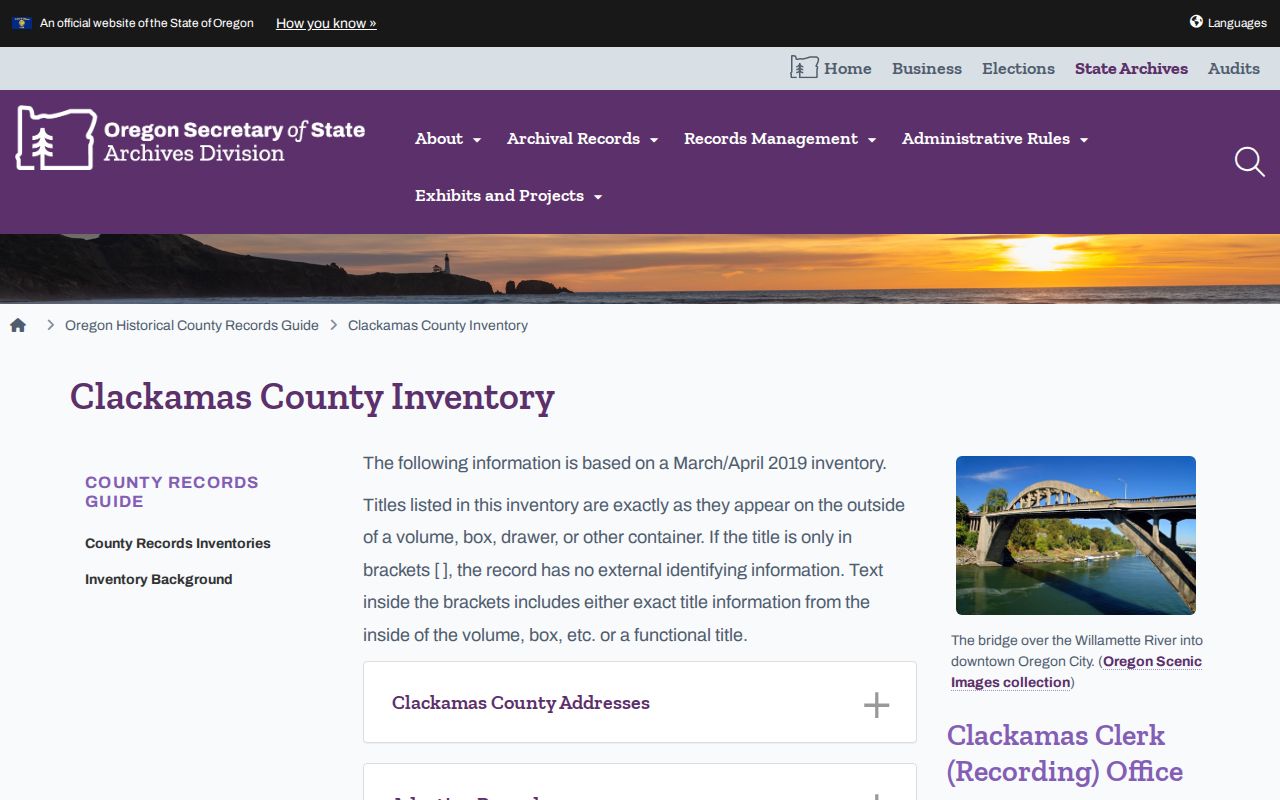
Record the original locality as printed. An early Oregon City or territorial label may not match a modern county description, yet it can still be the correct research path.
Clackamas County City Directory Entry Clues
A Clackamas County historic-directory entry is a dated publisher’s listing, not proof that every member of a household lived at an address on the printing date. The local sources reviewed did not supply an authorized Oregon City sample page or a verified local abbreviation key. Transcribe the wording before standardizing it: surname, initials, spouse or widow clue, address, town label, work or community text, and the page and column. Then photograph or cite the page if the holding permits it, and read the front matter for that volume’s own abbreviations.
| Name as printed | Capture surname, given name or initials, spelling variants, and any separate adult listing. |
|---|---|
| Household clue | Note a spouse, decedent, widow notation, or related wording only if the volume prints it. |
| Address detail | Record number, street, unit or building text, town label, and whether the section is alphabetical or by address. |
| Context field | Preserve any printed work, business, school, or organization text without treating it as current information. |
| Source citation | Keep the title, publisher, year, page or column, holding library, call number, and copying restriction. |
- Criss-cross directory
- An address-ordered section, when a specific volume includes one. No complete countywide reverse-directory run was verified.
- Householder index
- An index organized around the named head of a listed household, rather than a guarantee of every person present.
- Abbreviation key
- The publisher’s explanation of its marks, usually in the volume’s front matter. Consult it before assigning meaning to a letter.
Directory absence is also limited evidence. A move, subscription choice, rural route, spelling difference, compilation timing, or an uncanvassed household can explain why a name is missing.
Rural Clackamas County Directory Clues
Rural Clackamas County does not belong automatically on an Oregon City shelf. The 1936 Directory of Rural Residents, cited in historic-property research with County Directory Company and tax-assessor context, is a narrowly documented lead for that one year. It should be requested as a physical-source lead, not described as a current or complete online residents list. For earlier rural evidence, use the historical tax-roll and assessment layers identified by the State Archives, then compare town, block or lot, plat, and the period’s place name.
The free OHRI name index is a useful cross-check for Clackamas marriages, deaths, divorces, estates, guardianships, naturalizations, and name changes within its stated ranges. Original spellings are preserved, so an unusual directory spelling can be the right term to search first. An index hit identifies a record trail; it does not establish a current address or replace the underlying source.
The OHRI page presents record-type context for Clackamas County directory names and historical event searches.
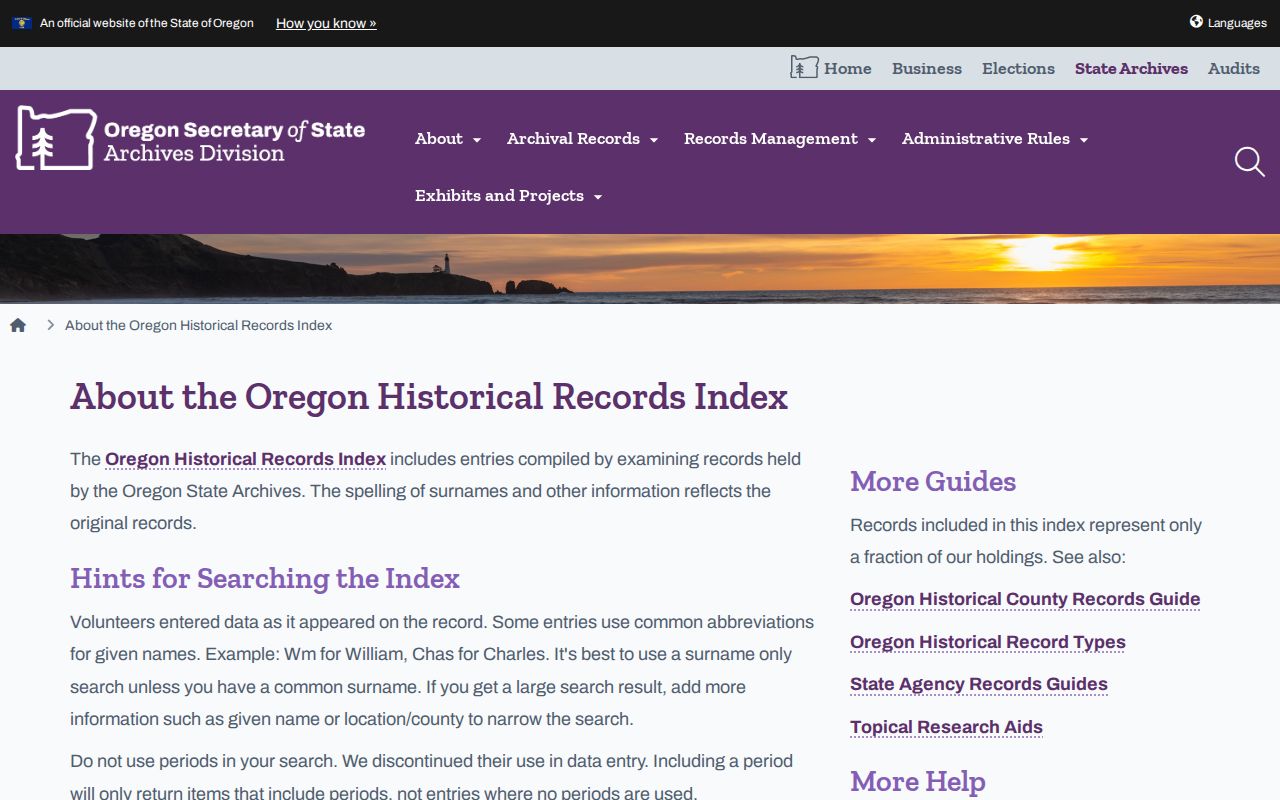
When the directory track ends, a matching estate, death, marriage, or naturalization record can explain a household change without turning a single listing into a complete biography.
Clackamas County Newspapers Beside Directories
Directory research gains context from the Oregon City newspaper collections. Oregon City’s digitization project reports fifteen historic titles from the territorial period through 1922 in the free Historical Oregon Newspapers collection. The library’s microfilm information also lists Spectator from 1846 to 1855, Argus from 1855 to 1878, and later Enterprise/Courier material through Enterprise Courier in 1992. A surname or address from a historic volume can be checked against a death notice, social column, property advertisement, community event, or historic-building reference.
Newspaper text is a lead, not proof of identity or residence. It needs the publication title, date, page, and a check against a directory, tax roll, census, deed party, or event record. The same caution applies to the Clackamas County Historical Society’s digitized photographs, which can add neighborhood or family context but may have incomplete metadata.
The Wilmer Gardner Family History Research Library is a local route for books, microfilm, maps, Donation Land Claim material, unindexed county vital and burial material, obituary clippings, vertical files, and donated family histories.
The research-library page shows a Clackamas County directory companion source at the Museum of the Oregon Territory.
Ask specifically for a title, surname, place, and year. That gives staff a usable starting point without assuming that an unlisted collection is publicly available.
Tracing Clackamas County City Directory Households
To trace a household through Clackamas County historical directories, begin with the correct municipality and closest known year. Oregon City research belongs first with its library catalog and reference staff; rural research may require the 1936 rural directory, tax rolls, or territorial and county census material. Record every entry verbatim, including the directory title, year, and page. Search nearby years only where a holding actually exists, and use an address section only when the same volume contains one.
- Identify the old municipality and approximate year, then ask the relevant library or archive for a surviving title.
- Copy the entry exactly, retaining initials, spelling, address, household wording, title, publisher, and page.
- Compare available adjacent years for an address, spouse, community detail, or business-name change.
- Match the period to a census or assessment and tax-roll layer, keeping the source date beside each observation.
- Use OHRI, newspapers, and estate or probate material to test whether a disappearance reflects a move, an event, or an indexing difference.
Released federal census schedules currently reach 1950. Territorial census rolls for 1854 through 1857 and assessment rolls for 1850 through 1859 offer earlier county layers, though the 1854 census record has totals only. These sources frame a sequence; none independently proves that every person at an address was listed.
Note: Preserve uncertainty when a name vanishes, because directories are publisher snapshots rather than complete resident rolls.
Clackamas County Maps and Directories
Oregon City’s surviving map layers make a useful records story. The State Archives inventory identifies Oregon City Sanborn fire-insurance maps for 1911 and 1925, while local historic-resource material also cites a 1892 map. The Library of Congress digitized 1911 Oregon City Sanborn set has 23 sheets. Historic county aerial records for 1948, 1961, 1964, and 1976 add a later physical-change trail. Compare a directory-era address with a map’s footprint, block, and surrounding streets, then test the name with a dated directory, tax roll, census, or probate source.
Clackamas County became one of Oregon’s original counties in 1843, and its boundaries changed through the 1840s before reaching their present configuration in 1854. Early records can therefore use territorial, changing-county, or Oregon City labels. The record’s original geography deserves to stay in the research notes even when it differs from a modern map.